Pre Purchase Building & Pest Inspection
Don't buy a money pit. Get a comprehensive assessment of the property's condition before you commit.
What is a pre purchase building and pest inspection?
A pre-purchase building and pest inspection is an essential evaluation carried out before you finalise the purchase of a property. During this inspection, qualified inspectors thoroughly examine the building to identify existing or potential issues that may affect its safety, structural integrity, and overall value. Inspectors assess the property for structural defects, maintenance concerns, and compliance with relevant building codes. They also check for signs of pest activity, including termites and borers, which can cause significant damage if left untreated.
Why do you need a Pre Purchase Building & Pest Inspection?
A pre-purchase building and pest inspection is essential for several reasons:
- Identify Structural Issues: It helps uncover any structural problems that could affect the property's safety and integrity.
- Detect Pest Infestations: The inspection checks for signs of pest infestations, such as termites or wood borers, which can cause significant damage.
- Safety Concerns: It identifies safety concerns that might not be visible during a regular viewing.
- Informed Decision Making: By identifying potential risks and repair costs, it enables buyers to make informed decisions.
- Negotiation Leverage: The findings can be used to negotiate a better deal with the seller.
- Avoid Costly Repairs: Early detection of issues can help avoid expensive repairs in the future.
- Peace of Mind: Ultimately, it ensures peace of mind by protecting your investment.
What We Will Examine:
During the inspection, all aspects of a property are carefully examined to provide an in-depth and detailed report on its overall condition, structural issues, roof leaks, bathroom leaks, and any moisture-related problems in the interior or exterior areas.
Interior
- • Test all walls with a moisture detector
- • Check all ceilings with a thermal detector
- • Inspect all windows and doors for damage, rot, and moisture
- • Examine all floors and components for damage, uneven surfaces, and pest activity
Bathroom and wet areas
- • Check all walls for damage, tile cracks, and fittings
- • Test walls adjacent to the shower with a moisture detector
- • Check all plumbing for leaks, damage, and proper functioning
- • Inspect all doors and joinery for moisture damage and condition
Roof Space
- • Check all timber frames for damage, incorrect installation, and termite activity
- • Look for leaking and light penetration through roof cladding
- • Check insulation for its condition and proper installation
- • Examine for moisture damage of timber frames and structural concerns
Subfloor
- • Inspect timber frames and floorboards for termite and borer damage
- • Check all timber frames for rot and moisture issues
- • Examine all piers and footings for cracks, subsidence, and structural concerns
- • Assess dampness, ventilation conditions, water ingress and drainage issues
Roof & Building exterior
- • Check roof tiles, cladding, flashings, gutters, and downpipes for leaks and damage
- • Inspect all walls for cracks, damages, and dampness
- • Examine damp-proof courses, weep holes, external doors, and windows
- • Check site drainage, vegetation, trees, and fences for potential issues
Common Findings
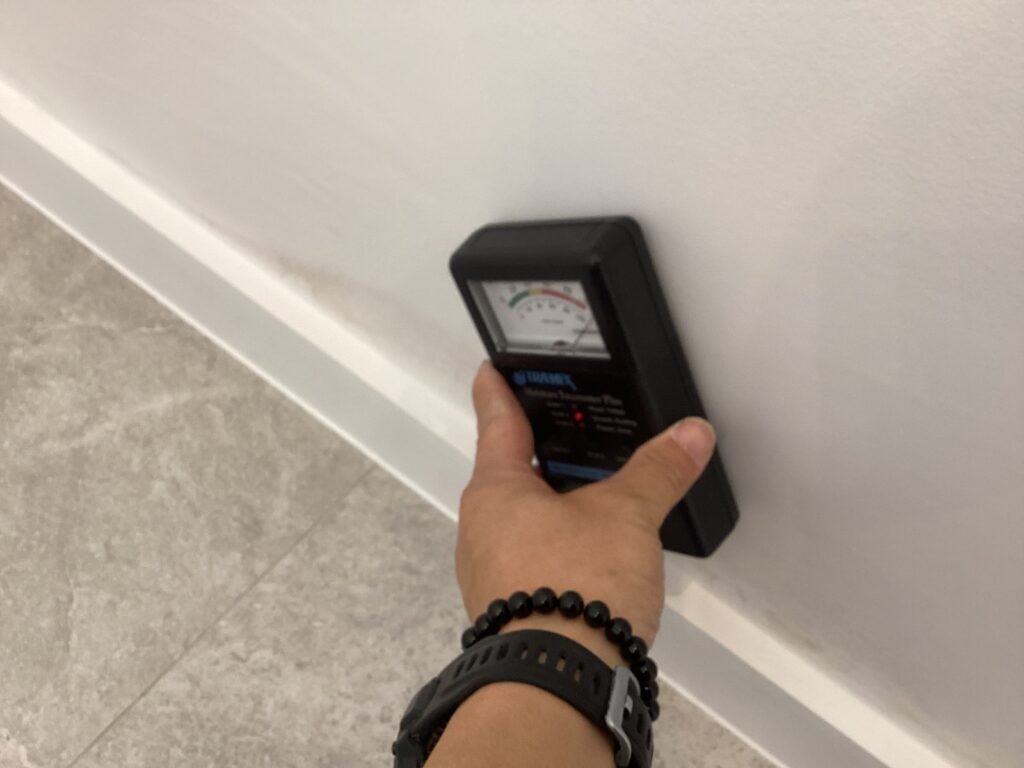
High moisture levels were detected by a moisture reader, indicating rising damp due to insufficient dampproof installation and site drainage.
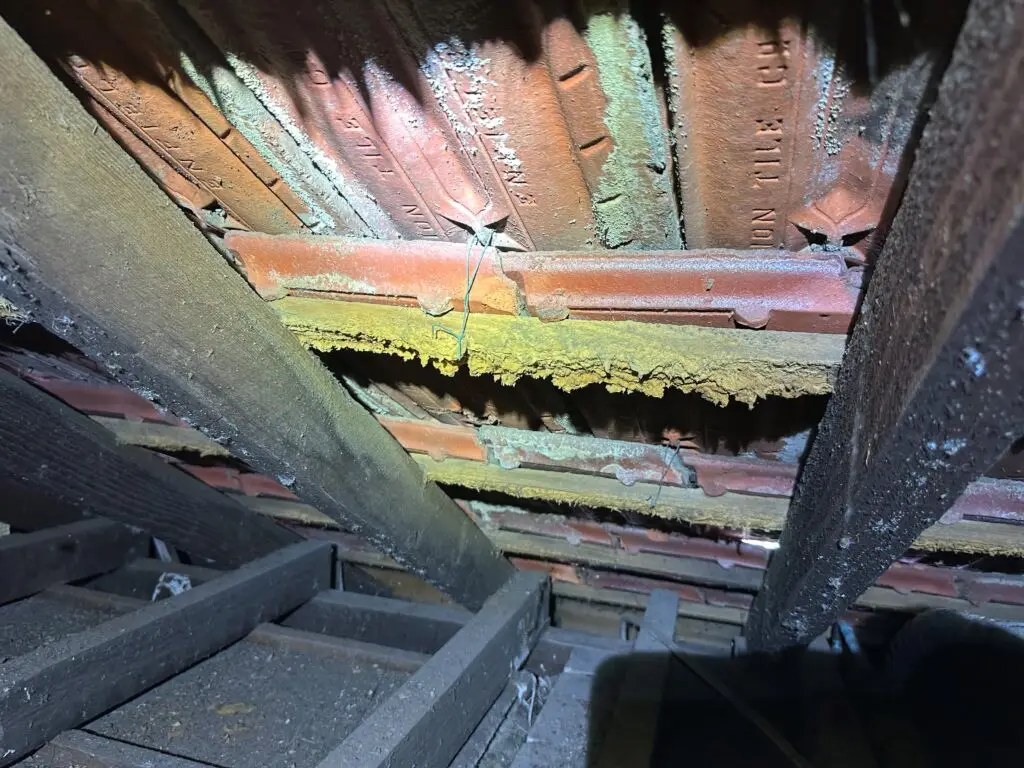
Chemical delignification was found to the roof tile batten which compromised the structural integrity, resulting in the collapse of the roof tiles and the formation of gaps.
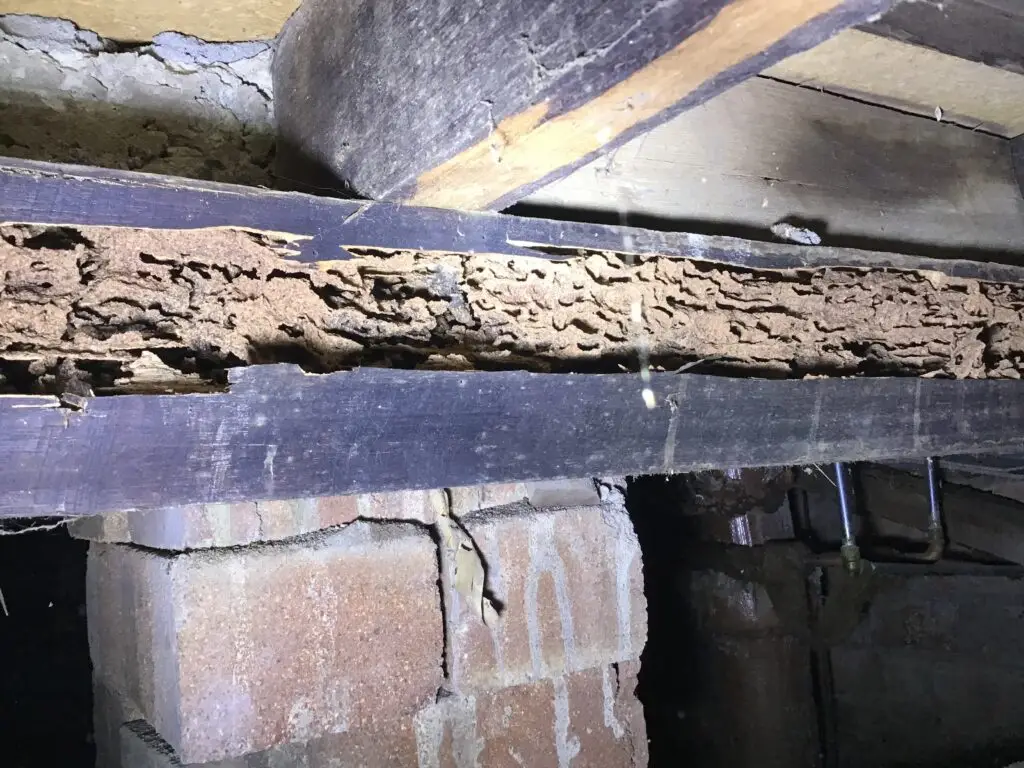
Termite damage has been identified in the timber bearer located in the subfloor. This necessitates an assessment, professional treatment, and replacement of the bearer.
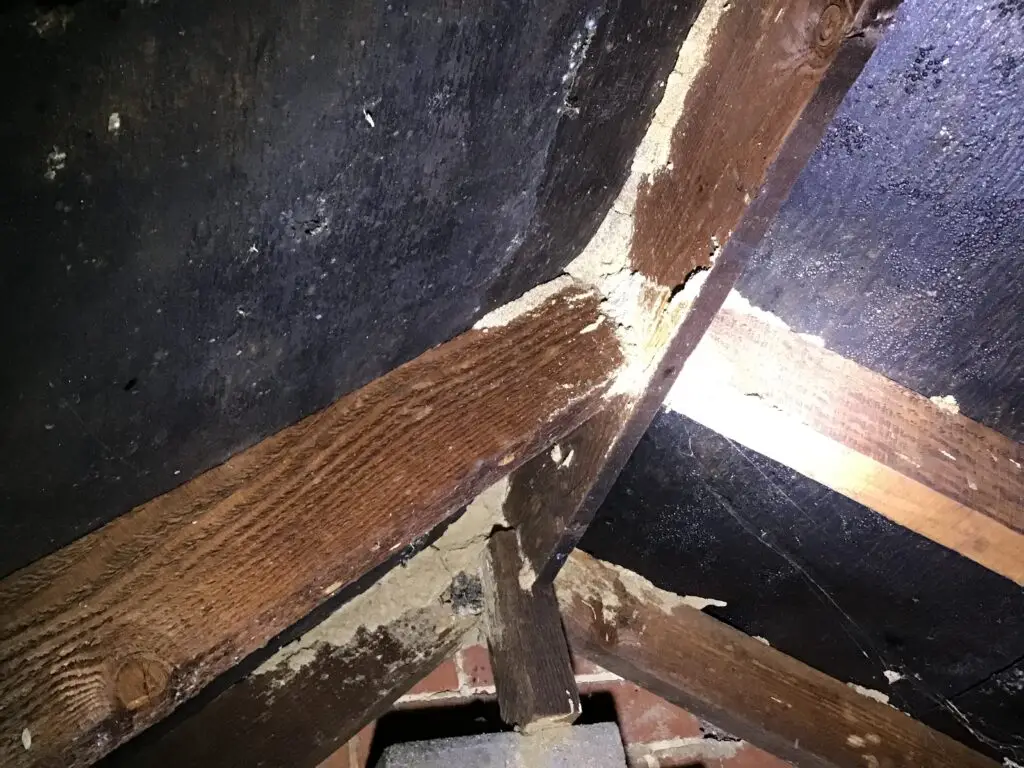
Termite activity has been identified in the timber rafters within the roof space. An invasive assessment is required to determine the extent of the damage.